
24K vs 22K vs 18K Gold: Which One Should You Buy?
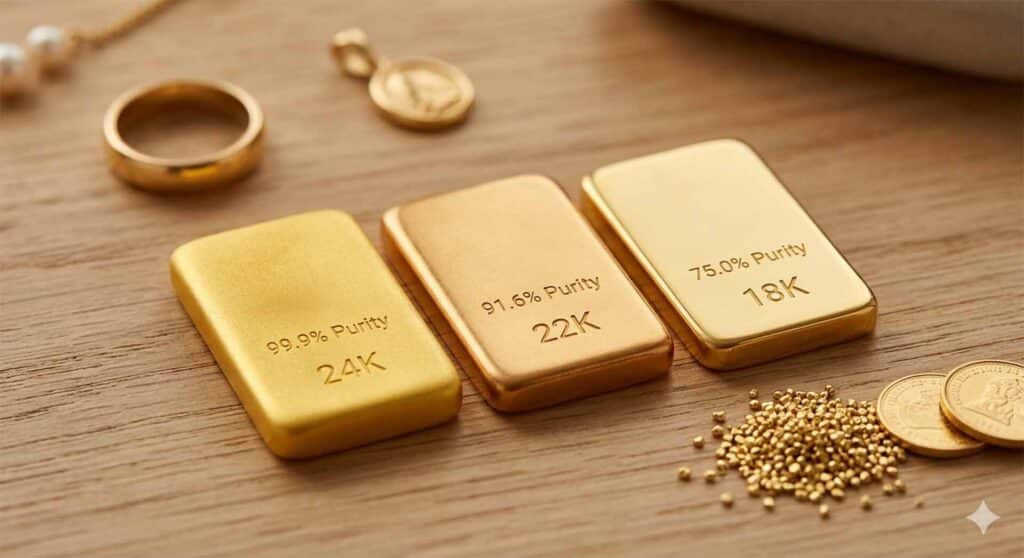
When you visit a showroom to purchase gold, you find different options, like 24k, 22K, or 18K gold. This can be confusing if you’re not a regular gold buyer or are investing in it for the first time.
You suddenly start wondering – “What do these numbers actually mean for my wallet and the longevity of my purchase?”, “Is higher purity always better?”, “Should I purchase a diamond ring in 24K or 18K gold?”
Having such doubts is natural. But you should know that each type of gold serves a different purpose and value. In this blog, we’ll explain what 24K, 22K, and 18K gold mean and how they are different from each other.
| Find the Right Gold for You – Schedule Your Appointment! |
|---|
What Is a Karat?
A karat, which is denoted by K, measures how much pure gold is present in any gold item.
Pure gold is naturally very soft and can be bent or scratched easily. Because of that, jewelers often mix it with other metals like silver, copper, zinc, or nickel to make it stronger and more suitable for daily use. The maximum scale of purity is 24K.
| Gold Type | Gold Purity |
|---|---|
| 24K Gold | 99.9% pure gold |
| 22K Gold | 91.6% gold |
| 18K Gold | 75% gold |
Main Features of 24K Gold
If you ask for the purest form of gold, 24K gold always wins. It hardly contains any other metals and is bright yellow in color. With the highest percentage of gold, it’s the most valuable. 24K gold is the best choice for investors looking for a long-term investment.
Pros
- You get the exact amount when reselling it.
- Many people prefer its rich yellow tone for cultural or ceremonial jewelry.
Cons
- Pure gold is soft, so it scratches and bends more easily than lower karat gold.
- Rings, bracelets, and chains made from 24K gold may wear down faster with regular use.
- It’s more expensive.
Main Features of 22K Gold
If you don’t want the risk of delicate handling of gold, choose 22k gold. With 91.6% pure gold and a small amount of stronger metals mixed in, it gives you a balance between purity and durability.
Pros
- You still own a very high percentage of real gold.
- Compared to 24K, it holds jewelry shapes better.
- Because of the high gold content, 22K gold often maintains strong resale potential.
- It still has that bright yellow gold look many buyers love.
Cons
- It’s softer than 18K and can scratch or bend over time.
- It’s not ideal for jewelry pieces that hold diamonds or heavy gemstones.
- It’s also more expensive than other lower karat gold.
Main Features of 18K Gold
It may not be as pure as the 24K and 22K gold, but it still contains 75% gold. Because of the higher percentage of mixed metals, 18K gold is stronger and more durable.
It is commonly used in engagement rings, diamond jewelry, luxury designer jewelry, watches, and everyday wear pieces.
Pros
- You can safely buy jewelry with diamonds and precious stones in 18K gold.
- There’s no risk of brittleness as it’s quite strong.
- It’s available in multiple colors, like yellow gold, white gold, and rose gold options.
Cons
- Resale prices are generally lower due to reduced gold content.
- Some buyers notice that 18K gold is slightly less rich in yellow color.
How to Choose the Right Gold for Your Needs?
Deciding which one to buy depends on your specific goal. Ask yourself these three questions –
1. What Is the Purpose of Buying Gold?
If you are buying to hedge against inflation and want a portable asset, 24K is your best bet. If you want a stunning piece of jewelry to wear daily, 18K is the practical winner.
2. How Sensitive Is Your Skin?
Some people are allergic to the nickel or copper used in alloys. Higher karat gold (24K and 22K) is less likely to cause a reaction because it has fewer “filler” metals.
3. What is your budget?
Since gold is priced by weight and purity, 18K allows you to get a larger, more intricate piece for the same price as a smaller, simpler 24K piece.
Read More: What Affects Gold Prices and Value?
| Confused About Gold Purity? – Call Now! |
|---|
What Mistakes Should You Avoid When Buying Gold?
Many first-time buyers focus only on price or appearance and later realize they overlooked important details.
- Never buy gold based only on appearance. Two pieces of jewelry may look almost identical, but their purity levels can be very different. Therefore, you should always confirm whether you are buying 24K, 22K, or 18K gold.
- Higher-purity gold is softer. If you plan to wear your jewelry every day, choosing very soft gold may lead to scratches, dents, or loose settings over time.
- Gold purity can directly impact resale pricing. Many buyers only think about style during purchase and forget to consider long-term value.
- You might find a gold piece attractive online, but you must check if it fits your daily routine, comfort, and maintenance expectations.
- Always check for karat stamps, purity markings, and authenticity documentation before buying gold.
- Always be careful when buying gold jewelry. Some pieces may look like real gold but only have a thin gold coating over another metal. It’s important to understand that Karat stamps are usually available for solid gold, while plated pieces should include terms such as “Gold Plated,” “Gold Filled,” or “Vermeil.”
Frequently Asked Questions
Does 24K gold ever tarnish? ▼
That’s why it’s important to check the gold purity, karat stamps, and seller credibility before making a purchase.
Why is 18K white gold more popular than 22K white gold? ▼
Can I sell 22K or 18K gold as easily as 24K? ▼
Read More About:
- Guide to Buying or Selling Gold Coins in California
- Top 10 Myths About Buying/Selling Gold Coins
- Why Choose a Professional Coin Dealer for Buying & Selling Coins
- Gold Prices: 5 Key Factors That Affect Gold’s Value Today
Takeaway
Choosing between 24K, 22K, and 18K gold is not about finding one perfect option. It is about understanding what works best for you.
If you want maximum purity and investment value, 24K gold makes sense, but if you want traditional jewelry with strong resale potential, 22K gold is often a great balance. Those who are looking for durable, stylish jewelry for everyday life usually find 18K gold to be the most practical choice.
However, make sure you buy gold from a trusted source that explains everything clearly and helps you make an informed decision instead of pushing a sale.
Buy Gold With Confidence at BEHR Gold, Coins & Jewelry
If you’re also searching for answers to questions like – “Where can I buy gold in Sacramento”
At BEHR Gold, Coins, and Jewelry, we help locals make smart, informed gold-buying decisions based on their goals and budget. We serve a wide range of clients, including:
1. Gold Investors
2. Coin Collectors
3. Estate Sellers
4. Everyday Sellers
5. First-Time Sellers
Our team takes the time to help you understand the difference between 24K, 22K, and 18K gold so you can choose the right option with confidence.
Call us today at 916-898-2608 to get better clarity on gold options.