
How Coin Shops Determine Coin Value: Key Factors That Make Coins Valuable Beyond Rarity
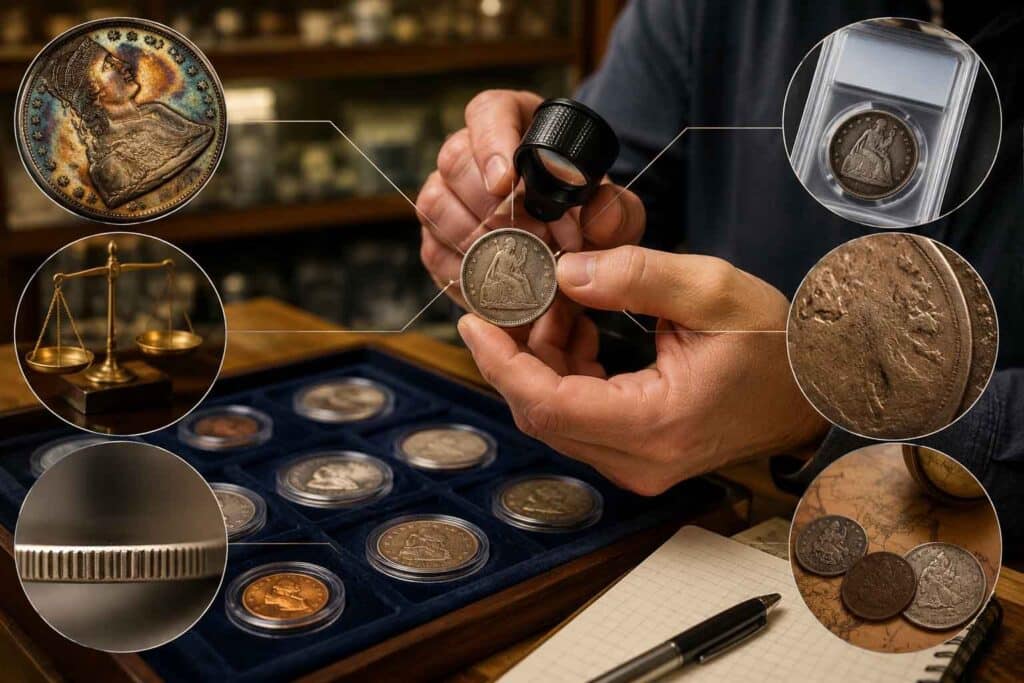
Have you ever wondered about the old coins in a forgotten tin can hidden away in the attic or in a corner drawer? These could be part of a vintage coin collection you inherited. But have you ever tried to find out their true worth? It is often assumed that any old coin must be worth a fortune, but rarity is only one part of the bigger puzzle.
For most local business owners, families, or estate executors, understanding technical terms such as numismatics, mint marks, and planchet errors can quickly become confusing. You might end up spending many hours online trying to understand these terms.
The worst part is the conflicting prices that your vintage coins claim to possess on various websites. This can leave you frustrated and confused. This is one reason many collectors choose to visit coin stores when determining the true value of their coins. So what do you do? In this guide, we’ll break down how to evaluate your collection, the hidden factors that affect market value, and how to get the right value for your coins.
| Unsure of Your Coin’s Worth? – Call Now! |
|---|
How Do Coin Shops Determine the Value of Your Coins?
Professional coin dealers use a systematic appraisal process using real-time market data and physical inspection to meet the industry standards. This ensures the price is not determined at a glance.
| [Physical Inspection] ➔ [Authentication] ➔ [Grading] ➔ [Market Pricing] ➔ [Final Offer] |
|---|
Coin dealers estimate the value by verifying the authenticity of the coin, assessing the exact preservation state or grade, identifying the precious metal content, and matching it against the latest wholesale and retail market demands.
1. Authentication and Inspection
Physical verification is the first step for the authentication of a coin. After this, high-powered loupes and X-ray fluorescence (XRF) scanners are used to determine the genuineness of the coin. The diameter, weight, and thickness of the coin are checked to rule out any altered mint marks, counterfeits, or artificially cleaned surfaces that can permanently damage the value.
2. Standardized Grading Assessment
The Sheldon grading scale, which is a 1 to 70 numeric system, is used by the dealers to evaluate the coins. A 70 grade represents a perfect coin under magnification, whereas a grade 1 is heavily worn and barely identifiable. A simple difference between grades 63 and 65 can easily result in hundreds and thousands of dollars, depending on the specific coin.
3. Real-Time Market Matching
After the type, date, and grade of a coin are established, coin dealers reference wholesale pricing guides such as the Coin Dealer Newsletter, also known as Greysheet. It is also analyzed with the help of the current auction results from major numismatic heritage houses. This tells the dealer what the coin is actively selling for among professionals instead of relying on the inflated listing prices found on marketplaces.
| Have Rare or Vintage Coins? – Schedule Your Appointment! |
|---|
Precious Metal Content: The Baseline Melt Value of Gold and Silver
The main driver of value for many everyday coins is not just history or collectible appeal, but also the raw material they are made from. This is known as the ‘melt value,’ or the intrinsic bullion value, of a coin.
Why Material Composition Matters?
If you possess silver quarters or dimes minted in 1964 or even earlier, or gold coins such as American Eagles, their value can easily fluctuate every minute based on the global commodities markets. A well-worn 1960 silver quarter can contain 0.1808 troy ounces of pure silver. So, irrespective of how damaged or scratched the quarter might be, its worth will always be at least its weight in silver.
Melt Value = (Total Weight of Coin) x (Purity Percentage) x (Current Market Spot Price)
Bullion Coins vs. Numismatic Coins
Coins fall under two main categories:
- Bullion Items: Evaluation based on purity and weight only, for example, gold rounds, silver bars, and other commonly dated bullion coins. The premium above the spot market price is generally quite low.
- Numismatic Items: Dealers evaluate numismatic items according to historic significance, collector demand, and condition. They might contain Silver or Gold within them, but their true value is much higher than the raw metal inside them.
Read More About: Understanding Bullion vs. Numismatic Value: What You Need to Know
The Power of Preservation: Mint State and Condition
The condition of the coin is often the deciding factor when comparing two otherwise identical coins.
The Pitfalls of Cleaning Coins
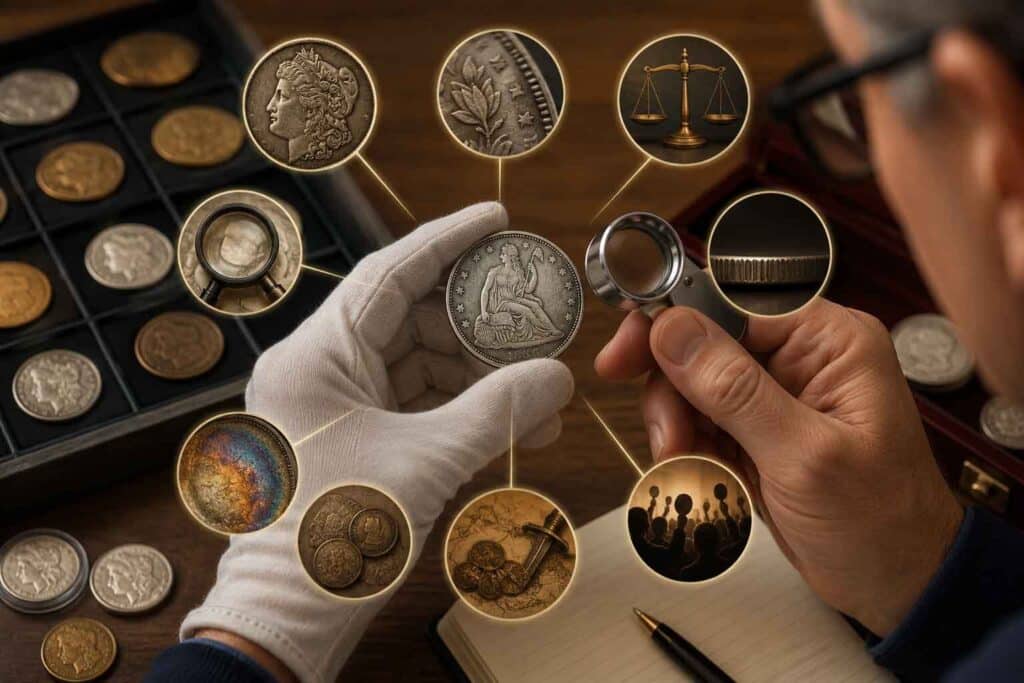
Making the coin appear shiny before visiting the coin dealers is one of the biggest mistakes that amateur sellers make. Do not clean your old coins, as scrubbing the old coins with baking soda, polish, or even a soft cloth creates micro-abrasions on the surface. A clean coin can be spotted instantly under a lens. Harsh cleaning methods strip away the original mint luster, which is the frosted sheen left by the coining press. As a result, the market value of a rare coin can drop considerably.
How Details Impact Value?
Dealers inspect the highest points of the design in a coin. Circulation can easily flatten these fine details, causing the coin to fall into the ‘good’ or ‘very good’ category. However, if these details are preserved, the coin can easily enter the lucrative Mint State or uncirculated bracket, thus unlocking premium pricing.
Historic Demand and the “Key Date” Phenomenon
A coin’s age does not determine its value. Instead, dealers consider specific years and manufacturing facilities that produced low mintage numbers, also known as key dates.
| Coin Type | Key Date Year | Mint Mark | Why Is It Valuable? |
|---|---|---|---|
| Lincoln Wheat Penny | 1909 | S VDB | Extremely low initial mintage with the designer’s initials. |
| Buffalo Nickel | 1937 | D (3-Legged) | A famous die error where one of the bison’s legs was polished away. |
| Morgan Silver Dollar | 1893 | S | Very few survived circulation, making high grades incredibly rare. |
| Washington Quarter | 1932 | D or S | The first year of the design had very low production numbers. |
Understanding Mint Marks
There are small letters stamped on each coin. These tell the dealers exactly where it was manufactured. Here, a ‘P’ stands for Philadelphia, ‘D’ for Denver, ‘S’ for San Francisco, and ‘CC’ for Carson City. This way, while an 1889 silver dollar from Philadelphia can be quite common, that same 1889 dollar with the CC mark from a historic Nevada mint can carry more value, as far fewer were produced there.
Market Liquidity and Why Dealership Offers Vary
When analyzing your collection, coin dealers will also have to estimate how long your coin may remain in inventory before being sold. This is known as market liquidity.
High-Demand vs. Niche Inventory
The fastest-moving commodities are the common silver bullion, U.S. Morgan dollars, and the modern gold coin. As the dealers know that they can easily sell these items within days, a very high percentage of the retail value can be offered to the seller. Foreign coins, ancient bronze coins, or highly specialized tokens, on the other hand, have a smaller group of buyers. As these items can sit in inventory for months or years, the dealer must analyze the storage time and the associated capital risk involved.
Overhead and Fair Business Margins
Local coin stores operate physical brick-and-mortar storefronts with a tight security system, specialized staff, and a heavy insurance policy. When purchasing from the public, the offer directly reflects the wholesale realities. A fair coin dealer will be clear about the division between what the coin sells for at retail and what they can realistically offer while maintaining a viable business.
| Get an Expert Coin Appraisal – Call Now for Trusted Guidance! |
|---|
Quick Queries From Our Clients!
Should I get my coins certified by PCGS or NGC before visiting coin shops? ▼
Not recommended. A professional coin grading service, such as PCGS (Professional Coin Grading Service) or NGC (Numismatic Guaranty Company), can charge anything between $40 and $70 per coin. The charge includes upfront authentication, insurance fees, and shipping, so you will lose money if your coin is worth only $20. It is best to bring your raw collection to reputable coin stores first for an honest evaluation. Your items will be checked for free, and you will quickly find out whether a certain coin is worth official third-party certification.
Why does online research show such wildly different prices for the same coin? ▼
What is the difference between a coin’s face value, melt value, and numismatic value? ▼
Read More About:
- Why You Absolutely Need to Start Investing in Gold Bullion Coins?
- Types of Gold Coins You Can Buy or Sell in California
- How to Get Coins Graded: Beginner’s Guide to Coin Grading?
- Understanding Bullion vs. Numismatic Value: What You Need to Know
Final Thoughts!
Determining the true value of your coins does not have to be a guessing game filled with confusion. Instead, you need to focus on the precious metal content, verified historical demand, and structural preservation to gain confidence before you approach a coin dealer. A basic understanding of the market trends can help you recognize a fair deal. It is also important to focus on the condition and preservation of your coin if you want to acquire a good amount from a dealer.
Evaluate Your Coins With BEHR Gold, Coins & Jewelry
BEHR Gold, Coins & Jewelry, one of the best coin dealers specializes in eliminating the unwanted guesswork and frustration from the equation. With 15+ years of experience, we offer clear and direct explanations along with honest market payouts, without the technical confusion. We have experienced appraisers who will explain step by step exactly how your collection pieces are valued.
We are one of the most reputable coin shops in Sacramento when it comes to serving a variety of clients and the neighboring Northern California communities. We serve:
- Coin Collectors: Looking to pass down a curated collection or searching for a fair wholesale acquisition.
- Estate Sellers: Who deal with complex inheritances with accurate and transparent asset evaluation.
- Gold Investors: Who want to rebalance or liquidate the bullion holdings.
- Everyday Sellers: Who want honest answers, fair prices, and a stress-free selling experience.
- First-Time Sellers: Who want a no-pressure environment to learn what their items are worth.
Find out the real value of your coin collection today and skip the confusing online platforms. Have your collection analyzed at one of the best coin stores for an accurate face-to-face evaluation. Call us at 916-898-2608.